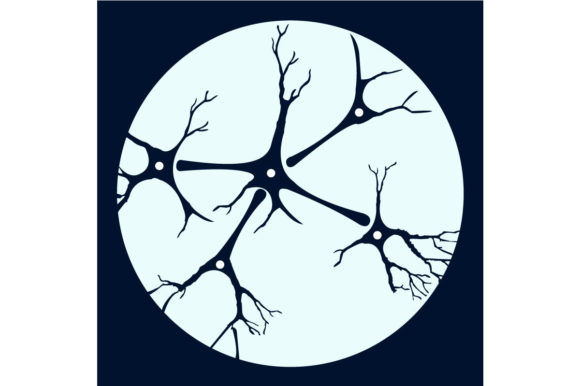
Neuron Under Microscope Illustration for Creators
Visualizing the complex machinery of the human brain has never been more accessible for designers and educators. A neuron under microscope illustration serves as a powerful bridge between intricate biological science and clear, communicative design. Whether you are developing educational materials for a biology classroom, creating branding for a neurology clinic, or crafting unique party decorations for a science-themed event, having high-quality digital assets is essential. These graphics allow you to bypass the steep learning curve of drawing anatomical structures from scratch while ensuring scientific accuracy and aesthetic appeal.
The primary value of these illustrations lies in their versatility and precision. Unlike a standard photograph taken through a lens, which can often be grainy or cluttered with background noise, a dedicated science illustration isolates the subject. It highlights the dendrites, the axon, the myelin sheath, and the synaptic terminals with clarity. This makes the neuron under microscope science illustration an ideal tool for explaining how nerve impulses travel or how the nervous system functions. For professionals, this means saving hours of research and drafting time, allowing you to focus on the broader message of your project rather than getting bogged down in anatomical details.
Unlocking Creative Potential with Vector and Raster Formats
One of the most significant advantages of purchasing a comprehensive graphic pack is the variety of file formats included. When you acquire a set containing SVG, EPS, JPG, and PNG files, you are essentially future-proofing your design workflow. Let's break down why this matters for your specific projects.
The SVG (Scalable Vector Graphics) and EPS (Encapsulated PostScript) files are the heavy lifters for professional design work. Because they are vector-based, you can scale the neuron image from the size of a business card to a massive billboard without losing any resolution or sharpness. This is crucial for logo design. Imagine a startup focused on cognitive health or a neuroscience research group needing a logo; the clean lines of an SVG file ensure the brand looks crisp on both a website favicon and a building sign. The EPS file, saved as Adobe Illustrator version 10, ensures compatibility with a wide range of design software, making it accessible even if you aren't using the latest creative suite updates.
On the other hand, the raster files—the JPG and PNG at 300dpi—serve immediate, high-quality printing needs. The 300 dots per inch resolution is the industry standard for professional printing. If you are creating handmade cards, invitations, or stationery, these files ensure that the final product looks sharp and professional, not pixelated. The PNG file, specifically, comes with a transparent background. This is a game-changer for web design and digital compositing. You can drop the neuron illustration directly onto a colored background, a textured paper scan, or a complex website layout without worrying about unsightly white boxes surrounding the image.
Practical Applications Across Industries
The utility of a neuron under microscope illustration extends far beyond the laboratory. Here is how different creators can leverage these assets:
- Educators and Tutors: Create engaging worksheets, presentation slides, and study guides. Visual aids significantly improve retention rates for students learning about the nervous system.
- Small Business Owners: Develop branded merchandise for health clinics, therapy centers, or science museums. The imagery conveys professionalism and expertise instantly.
- Event Planners and Hobbyists: Design unique announcements and party decor for "Mad Scientist" birthdays, graduation parties for medical students, or STEM-focused community events.
- Web Designers and Bloggers: Enhance articles about mental health, psychology, or technology with relevant, high-resolution graphics that keep readers engaged.
- Crafters: Use the high-DPI files for sublimation printing on mugs, t-shirts, or tote bags, creating handmade craft items that appeal to science enthusiasts.
Consider a scenario where a freelance marketer is working with a client who sells nootropic supplements. Using a generic stock photo might feel impersonal or overused. However, customizing a neuron under microscope science illustration allows the marketer to adjust colors to match the brand's palette, perhaps highlighting the synaptic connections in the brand's signature color to symbolize enhanced connectivity. This level of customization adds a layer of thoughtfulness and quality to the final deliverable.
Things to Consider Before You Start
While these digital elements are incredibly useful, there are a few practical considerations to keep in mind to ensure you get the best results. First, understand the difference between editing vector and raster files. If you plan to change the shape or color of individual parts of the neuron, you will need software capable of opening SVG or EPS files, such as Adobe Illustrator, Inkscape, or CorelDRAW. If you only have access to basic image editors like Photoshop or free online tools, the JPG and PNG files will be your go-to, though your ability to modify the internal details will be limited.
Secondly, think about your end medium. If your primary goal is web design, the SVG is often the superior choice due to its small file size and scalability across different screen resolutions. However, if you are sending files to a professional print shop for handmade cards or large format posters, always default to the 300dpi JPG or PNG, or provide the EPS file if the printer supports vector input. Using a low-resolution web image for a large print job is a common mistake that can ruin an otherwise great design.
Finally, consider the context of your audience. While a detailed neuron under microscope illustration is scientifically accurate, ensure it fits the tone of your project. For a children's educational book, you might want to simplify the colors or add labels. For a high-end medical journal, the stark, precise nature of the original illustration is likely perfect. The beauty of owning these files is the freedom to adapt them to fit those specific needs without starting from zero.
In summary, integrating a high-quality neuron illustration into your toolkit opens up a world of creative possibilities. From enhancing educational content to building a cohesive brand identity, these assets provide the foundation for professional and impactful visual communication. By understanding the strengths of each file format and aligning them with your project goals, you can create work that is not only visually stunning but also deeply informative.