Integrating Watercolor Unicorn Sublimation into Professional Creative Workflows
In the current landscape of digital design and physical product creation, the bridge between a conceptual illustration and a finished tangible good is often defined by the quality of assets and the efficiency of the production process. Watercolor Unicorn Sublimation represents more than just a trending aesthetic; it is a functional component within a broader manufacturing and design workflow. For professionals ranging from small business owners to freelance graphic designers, understanding how to integrate high-resolution sublimation assets into existing operations is critical for maintaining consistency, reducing turnaround time, and ensuring product viability.
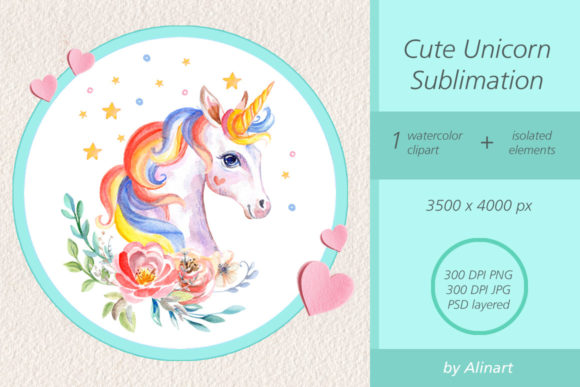
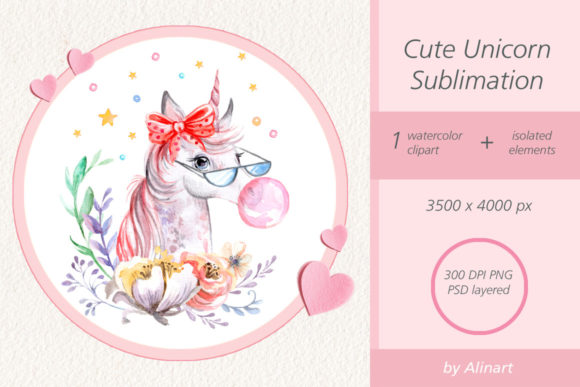
The core of this workflow begins with asset selection. When incorporating a watercolor hand-painted cute unicorn with flowers into a project, the source material must meet specific technical standards to survive the translation from screen to substrate. The collection described here, featuring 18 isolated images of unicorns, flowers, and leaves, serves as a modular toolkit rather than a static image. By utilizing a set of isolated elements, creators gain the flexibility to compose unique layouts tailored to specific client needs or market demands, rather than being restricted to a single pre-made composition.
Technical Specifications and File Preparation
Before any design work commences, the integrity of the source files determines the ceiling of the final output quality. In sublimation printing, resolution is non-negotiable. The illustrations in this set are provided at 3600 x 4000 pixels with a resolution of 300 dpi. This specification is vital because sublimation involves transferring ink into the fibers of a material using heat and pressure. If the source image is below 300 dpi, the resulting print on items like mugs, textiles, or wallpaper will appear pixelated or soft, undermining the professional quality of the brand.
The file formats included—PNG and PSD—are selected for their compatibility with industry-standard workflows. PNG files, which feature transparent backgrounds, are essential for layering elements without unwanted white boxes or artifacts. These can be opened in almost all photo editing programs, making them accessible for users who may not rely exclusively on the Adobe ecosystem. However, for deep customization, the layered PSD files compatible with Adobe Photoshop offer superior control. Layered files allow designers to adjust the positioning of the unicorn relative to the floral elements, modify color balances to match specific brand palettes, or isolate specific leaves to create new patterns.
It is important to note that while text and layouts shown in previews are intended for display only, the underlying assets are ready for immediate integration. This distinction ensures that the designer retains full creative control over typography and arrangement, preventing copyright issues and allowing for true customization.
Workflow Integration: From Concept to Production
Integrating these watercolor elements into a business workflow requires a structured approach that spans planning, execution, and quality control. The process typically unfolds in three phases:
- Pre-Production Planning: Before opening the design software, the creator must define the end product. Is the goal to produce wedding invitations, party decorations, or apparel? The versatility of the watercolor unicorn sublimation clipart allows it to fit diverse categories. For instance, a boutique owner planning a spring collection might select specific flower and leaf elements to create a seamless pattern for bed linen or textile bags. During this phase, organization is key. Downloading the full set and organizing the 18 isolated images into a dedicated asset library ensures quick retrieval during the design sprint.
- Design and Composition: This is where the modular nature of the assets shines. Using the PSD files, a designer can construct a custom composition. Perhaps a greeting card requires a large central unicorn figure surrounded by a delicate border of leaves, while a sticker sheet requires multiple smaller variations of the same character. The ability to manipulate individual layers means that one asset pack can generate dozens of unique SKUs (Stock Keeping Units). Designers should focus on negative space and balance, ensuring that the whimsical nature of the watercolor style does not clutter the final layout. For web design or digital scrapbooking, the high-resolution PNGs can be scaled down without loss of clarity, ensuring fast load times while maintaining visual fidelity.
- Output and Sublimation: Once the design is finalized, the file must be prepared for the specific sublimation printer and heat press being used. This often involves mirroring the image horizontally, as sublimation transfers reverse onto the substrate. The 300 dpi resolution ensures that even when printed on curved surfaces like mugs or uneven textures like tote bags, the fine details of the watercolor brushstrokes remain crisp. Consistency in color management is crucial here; professionals should calibrate their monitors and printers to ensure the soft pastels of the watercolor style translate accurately to the physical product.
Diverse Application Scenarios
The utility of this clipart set extends far beyond simple paper prints. Because the files are high-resolution and isolated, they interact seamlessly with various manufacturing processes and platforms.
- Apparel and Textiles: The soft, organic edges of watercolor illustrations are particularly effective on fabric. When sublimated onto polyester blends or coated textiles, the colors bleed slightly into the fibers, enhancing the hand-painted look. This makes the assets perfect for t-shirts, leggings, and scarves. The transparency of the PNG files ensures that the design integrates naturally with the fabric color if a non-white base is used, though white or light-colored substrates yield the most vibrant results.
- Hard Goods and Decor: For items like mugs, coasters, and phone cases, the durability of sublimation is a major selling point. The unicorn and flower motifs can be wrapped around cylindrical objects or centered on flat surfaces. The 3600 x 4000 pixel dimension provides enough data to cover large areas, such as mouse pads or puzzle surfaces, without stretching the image to the point of degradation.
- Paper Products and Stationery: Wedding invitations and greeting cards benefit from the elegant, artistic feel of watercolor. Designers can use the isolated leaves to create borders or the unicorn as a focal point. Since these are often produced in bulk, having a set of varied elements allows for the creation of coordinated suites—invitations, RSVP cards, and thank-you notes—that share a visual language but remain distinct.
- Digital Assets: Beyond physical goods, these images serve as robust resources for web design and digital marketing. Bloggers and content creators can use the elements to break up text, create social media graphics, or design downloadable planners. The "scrapbooking" potential also opens avenues for selling digital planner stickers, a lucrative niche in the productivity and hobbyist markets.
Optimizing Efficiency and Quality Control
For entrepreneurs and freelancers, time is a finite resource. The availability of a comprehensive set for downloading eliminates the need to source individual elements from disparate providers, which often leads to inconsistent styles and licensing headaches. By standardizing on a single, cohesive art style like the watercolor hand-painted cute unicorn, businesses can build a stronger brand identity. Customers recognize the consistent aesthetic across different products, fostering trust and loyalty.
Quality control in this workflow relies heavily on the initial file quality. Since the PSD files are layered, designers can perform last-minute adjustments to fix potential issues before printing. For example, if a specific flower clashes with the background color of a chosen mug, that element can be hidden or recolored within Photoshop. This level of editability reduces waste in the physical production phase, where failed prints cost money in both materials and machine time.
Furthermore, the compatibility of these files with a wide range of software ensures that the workflow is not bottlenecked by tool limitations. Whether a team uses advanced Adobe suites or more accessible photo editors, the PNG format guarantees usability. This inclusivity allows for collaborative environments where different team members can contribute to the design process using their preferred tools.
Long-Term Value and Scalability
Investing in high-quality sublimation assets is a strategic decision for long-term business growth. Unlike trend-dependent graphics that may fade in popularity, the combination of unicorns and florals possesses a timeless appeal suitable for various demographics, from children's parties to adult novelty gifts. The scalability of the workflow means that as demand increases, the production process does not need to change fundamentally; only the volume of output increases.
Moreover, the ability to recompose the 18 isolated elements means the asset pack does not become stale. A designer can return to the same files months or years later and create entirely new products by arranging the unicorns and leaves in fresh configurations. This longevity maximizes the return on investment for the initial purchase.
In conclusion, Watercolor Unicorn Sublimation is a versatile, high-fidelity resource that fits seamlessly into professional creative workflows. By leveraging the technical strengths of 300 dpi layered files and the artistic flexibility of isolated watercolor elements, creators can efficiently produce a wide array of high-quality products. From the initial download to the final heat press, every step of the process is supported by assets designed for precision, compatibility, and enduring aesthetic value. Thank you for stopping by Alinart, where the focus remains on providing tools that empower your creative and business objectives.